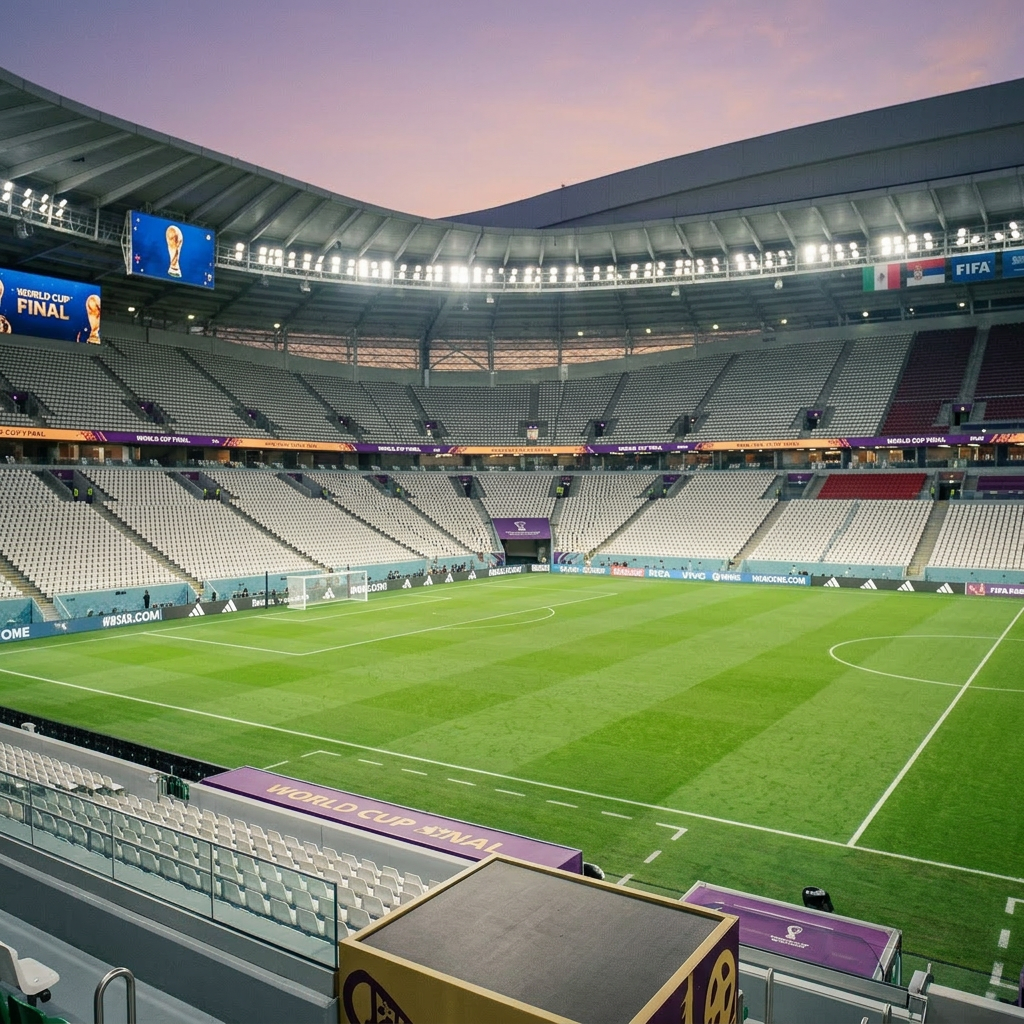

Explore how the FIFA World Cup is implementing sustainability practices like carbon tracking, existing stadium use, transport planning, and waste reduction.
Discover the innovative sustainability strategies being employed at the FIFA World Cup.
Key Takeaways
- The FIFA World Cup 2026 uses existing stadiums to reduce construction emissions
- FIFA is tracking emissions across the entire tournament lifecycle
- Transportation is the largest source of environmental impact
- Stadiums must meet sustainability certification standards (like LEED)
- Even with sustainability efforts, emissions are still projected to be extremely high
Why Sustainability Matters at the World Cup
The FIFA World Cup is one of the largest tourism events in the world, attracting millions of international visitors and generating massive global media attention.
Because of its scale, it also creates significant environmental impacts through:
- International air travel
- Stadium operations
- Infrastructure development
- Tourism-related consumption
According to FIFA’s sustainability strategy, reducing environmental impact is now a core part of tournament planning, especially for the expanded 2026 World Cup across the United States, Canada, and Mexico.
Source: FIFA Sustainability Strategy 2026
Understanding the sustainability efforts at the FIFA World Cup is crucial for future events.
The FIFA World Cup brings together fans globally, emphasizing sustainability.
Sustainability at the FIFA World Cup ensures a balance between celebration and responsibility.
1. Using Existing Stadiums Instead of Building New Ones
One of the most important sustainability decisions for the 2026 World Cup is the use of 16 existing stadiums across North America instead of constructing new facilities.
This reduces:
- Construction emissions
- Material waste
- Long-term underused infrastructure (white elephant stadiums)
FIFA explicitly highlights this as a key sustainability strategy to reduce environmental impact and improve legacy outcomes for host cities.
Source: FIFA Environmental Pillar
We will see how the FIFA World Cup adapts to environmental challenges.
2. Full Carbon Emissions Tracking Across the Tournament
For the first time at this scale, FIFA is implementing a comprehensive greenhouse gas inventory system that tracks emissions across:
- Stadium operations
- Team travel
- Fan transportation
- Broadcasting and logistics
This lifecycle approach means emissions are measured from planning through post-event operations, not just during match days.
Source: FIFA Environmental Pillar
3. Transportation Is the Biggest Sustainability Challenge
While sustainability efforts are expanding, transportation remains the largest environmental challenge for the World Cup.
Key impacts include:
- International flights for fans
- Domestic travel between host cities
- Team logistics across multiple countries
Research and reporting suggest that air travel alone could account for the majority of total emissions, especially due to the tournament’s scale and geographic spread.
Source: Reuters World Cup Emissions Report
To address this, host cities are investing in:
- Expanded public transit systems
- Rail and shuttle connectivity
- Low-emission transportation fleets
- Improved stadium access planning
4. Sustainable Stadium Standards (LEED and Certifications)
All World Cup venues are required to meet sustainability benchmarks, including green building certification standards such as LEED.
These standards evaluate:
- Energy efficiency
- Water conservation
- Waste management systems
- Indoor air quality
- Transportation access
Several venues have undergone upgrades such as:
- LED lighting systems
- Water-efficient infrastructure
- Improved waste sorting systems
The FIFA World Cup prioritizes sustainability like never before.
Addressing sustainability at the FIFA World Cup is essential for future events worldwide.
This reflects a broader trend in sports tourism where stadiums are increasingly treated as long-term sustainability assets, not just event venues.
Source: FIFA Sustainability Framework
5. Temporary and Modular Infrastructure
To reduce long-term environmental damage, the World Cup is also using temporary and modular infrastructure where possible, including:
- Temporary seating expansions
- Flexible event structures
- Reusable venue systems
- Reduced permanent construction
After the FIFA World Cup, the lessons learned will impact future tournaments globally.
This helps limit the long-term footprint often associated with mega-events, especially when facilities risk becoming underused after the tournament.
6. Waste Reduction and Circular Economy Strategies
FIFA’s sustainability framework includes a focus on circular economy principles, such as:
- Recycling and composting programs in stadiums
- Reduced single-use plastics
- Digital ticketing systems
- Reusable event materials
The goal is to reduce landfill waste and improve resource efficiency throughout the event lifecycle.
Engaging with sustainability at the FIFA World Cup will influence future generations.
Source: FIFA Environmental Pillar
7. Climate Mitigation and Offset Programs
FIFA is also investing in climate mitigation initiatives, including:
- Reforestation projects
- Urban greening programs in host cities
- Carbon offset partnerships
These programs aim to balance unavoidable emissions from travel and operations, although they do not eliminate the overall carbon footprint.
8. The Reality: The World Cup Still Has a Massive Carbon Footprint
Despite sustainability improvements, projections suggest the 2026 World Cup will still generate:
- ~7.8 million metric tons of CO₂
- A significant increase compared to previous tournaments
- Up to ~87% of emissions linked to air travel
Source: Reuters Climate Analysis
Ultimately, the FIFA World Cup will redefine how we view large events.
This highlights a key tension in modern tourism:
Even “sustainable” mega-events remain highly carbon-intensive due to global travel demand.
Engagement in sustainability at the FIFA World Cup is a critical conversation.
What This Means for Tourism and Destination Planning
The FIFA World Cup experience is enhanced by sustainable initiatives.
The World Cup demonstrates how sustainability is becoming central to tourism and event strategy, especially for mega-events.
Key implications include:
- Cities must balance tourism growth with environmental impact
- Infrastructure planning now includes carbon considerations
- Transportation systems are as important as stadium design
- Sustainability is becoming a competitive factor in hosting rights
For tourism destinations, this shifts the focus from short-term economic impact to long-term environmental responsibility and destination resilience.
Final Thoughts
The FIFA World Cup is actively integrating sustainability practices, from using existing stadiums to tracking emissions and improving transportation systems.
However, the scale of the event means that even with these measures, environmental impacts remain significant.
This creates a central question for the future of tourism:
Can global mega-events ever truly be sustainable, or only less harmful?
As the FIFA World Cup approaches, the focus on sustainability intensifies.
The FIFA World Cup’s sustainability practices are setting new standards.
Witnessing sustainability at the World Cup is inspiring for future events.
The FIFA World Cup showcases how large-scale events can prioritize sustainability.
Learning from the FIFA World Cup will pave the way for sustainable tourism.
Participating in the FIFA World Cup means embracing sustainable practices.
Through sustainability, the FIFA World Cup aims for a greener future.
Leave a Reply